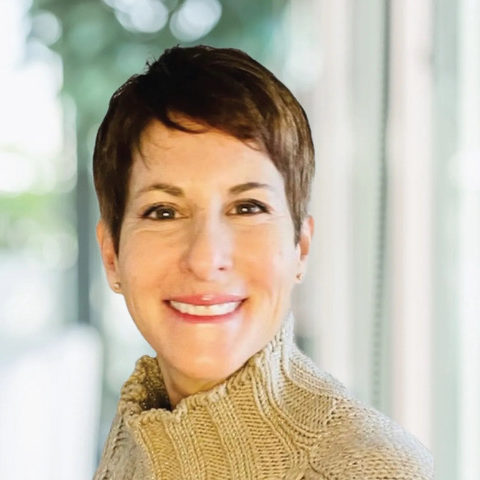
An interview with Amy Goldberg, editor-in-chief
As the first Indigenous First Nations woman to appear in Sports Illustrated Swimsuit and the first Indigenous woman crowned Miss Universe Canada, Ashley Callingbull continues to inspire people around the world through her courage, authenticity, and unwavering commitment to uplifting others.
Ashley reminds us that true nourishment extends far beyond what’s on our plates. It lives in our relationships, our culture, our mindset, our purpose, and our connection to ourselves.
In this candid conversation, Ashley reflects on the lessons that have sustained her through challenges, the values that keep her grounded, and how women can nourish every part of their lives while boldly pursuing their dreams.
When you hear the words “Get Nourished,” what do they mean to you personally at this stage of your life?
At this stage of my life, “Get Nourished” means taking care of the whole person, mind, body, spirit, and heart. For so long, we can become focused on what we need to accomplish or what everyone else needs from us. Nourishment is about coming back to yourself. It’s asking, “What do I need to feel whole, grounded, and connected?” For me, that means surrounding myself with love, staying connected to my culture and family, taking care of my health, and making space for the things that bring me peace and joy.
You’ve achieved extraordinary milestones, but what nourishes your spirit when the cameras are off and no one is watching?
The quiet moments nourish me the most. Being with family, being on the land, spending time in nature, laughing with the people I love, and having moments where I don’t have to be “on.” Those are the moments that remind me who I am beyond any title, achievement, or public recognition. Success can be exciting, but the things that truly fill my spirit are often very simple. They’re rooted in love, connection, gratitude, and home.
Your connection to your Indigenous roots is an important part of who you are. How has your culture nourished your strength, identity, and sense of purpose?
My culture is at the heart of who I am. As a Plains Cree woman from Enoch Cree Nation, my connection to my community, my ancestors, our teachings, and the land has given me a foundation that no accomplishment could ever replace. My culture reminds me that I come from strong people and that I carry generations of resilience with me.
It has also taught me that when I walk into a space, I’m not walking into it only for myself. I carry my community and my ancestors with me. That gives me strength, but it also gives me purpose. I want young Indigenous people to see that our identities are something to be proud of and that there is no room we should believe is beyond us.
Success often comes with pressure and expectations. How do you protect your mental and emotional well-being while living so much of your life in the public eye?
I’ve learned that boundaries are an important form of self-respect. Not everyone needs access to every part of you, and you don’t have to respond to every opinion people have about your life.
I try to stay close to the people who knew and loved me before any of the titles or attention. They keep me grounded. I also remind myself that social media and public perception are only small pieces of a much bigger life. Protecting my peace means knowing when to disconnect, knowing when to say no, and giving myself permission to rest without feeling guilty about it.
What is one belief about yourself that you’ve had to nourish consistently in order to overcome self-doubt?
That I belong.
There have been many times in my life when I’ve entered spaces where I didn’t see anyone who looked like me or came from a background like mine. In those moments, it can be easy to question whether you belong there. I’ve had to continually remind myself that I earned my place and that I don’t need to become someone else to deserve it.
I can be Indigenous. I can be feminine. I can be ambitious. I can be strong. I can be all of those things at the same time. I don’t have to shrink any part of myself to make other people comfortable.
Looking back, what advice would you give the younger Ashley who was still learning to find her voice and confidence?
I would tell her, “Your voice is going to become one of your greatest strengths, so don’t be afraid to use it.”
I would tell her that the difficult things she experiences will not define the rest of her life. They will teach her how strong she is. I would also tell her not to spend so much time worrying about whether everyone understands or accepts her. There will always be people who have opinions about who you should be. What matters is learning who you are and standing confidently in that truth.
And I would tell her to dream bigger than what she can currently see, because there are opportunities waiting for her that she doesn’t even know are possible yet.
Many women struggle with feeling “enough.” What has helped you embrace your confidence without tying it solely to accomplishments?
Understanding that accomplishments are things I’ve done, they’re not who I am.
Titles come and go. Careers change. Recognition fades. If your entire sense of worth is built around achievement, you can spend your whole life chasing the next thing and never actually feel fulfilled.
My confidence comes from knowing my values, knowing where I come from, and knowing the kind of woman I want to be. I’m proud of my accomplishments, but I’m equally proud of the way I love my family, the way I represent my community, the way I’ve grown through difficult experiences, and the way I continue to choose myself.
You don’t have to earn your worth. You have to recognize it.
You’ve become a role model for so many young Indigenous girls. What responsibility do you feel comes with being a trailblazer?
It’s a responsibility I take very seriously. When I was younger, I didn’t always see Indigenous women represented in the spaces I dreamed about entering. So, when a young Indigenous girl sees me and thinks, “Maybe I can do that too,” that means more to me than any title.
Being a trailblazer isn’t only about being the first person through a door. It’s about helping make sure that door stays open for the people coming behind you.
I want Indigenous girls to know that they never have to choose between their culture and their dreams. Their identity is not something they need to leave behind in order to succeed. It can be one of their greatest sources of strength.
What daily rituals, practices, or habits help you feel grounded, energized, and nourished from the inside out?
Gratitude is a big one for me. Taking a moment to recognize what I’m grateful for changes the way I approach my day.
Movement also helps me feel strong and energized, and spending time outside helps me reconnect with myself. I value quiet time, meaningful conversations with people I love, and moments where I can put my phone away and simply be present.
I’ve learned that nourishment doesn’t always have to be something elaborate. Sometimes it’s getting enough sleep. Sometimes it’s laughing until your stomach hurts. Sometimes it’s saying no. Sometimes it’s being alone. The important thing is learning to listen to yourself.
If you could nourish one area of women’s wellness that you feel is often overlooked, what would it be and why?
I would nourish women’s emotional well-being, especially our ability to rest without guilt.
Women are often expected to carry so much. We take care of families, careers, communities, relationships, and responsibilities, and sometimes we become so accustomed to being strong that we forget strength also includes knowing when we need support.
Rest isn’t weakness. Asking for help isn’t weakness. Setting boundaries isn’t selfish. I think women deserve more spaces where they can simply exist without having to prove their productivity or their strength.
What has been the most nourishing relationship, lesson, or experience in your life—and how has it shaped the woman you are today?
My connection to my family, community, culture, and ancestors has nourished me throughout every chapter of my life. They remind me where I come from and why the work I do matters.
One of the greatest lessons I’ve learned is that difficult experiences can either convince you to become smaller or teach you how powerful you really are. I’ve chosen to let them teach me.
Everything I’ve lived through, the beautiful moments and the painful ones has shaped me into the woman I am today. I’m still growing, still learning, and still becoming. To me, that’s part of nourishment too, giving yourself permission to evolve.
Complete this sentence: “The most powerful thing a woman can do to nourish her life is ________________________.”
The most powerful thing a woman can do to nourish her life is choose herself, without guilt, without apology, and without believing she must become less of who she is to deserve the life she dreams of.
Thank you, Ashley.
Ashley Callingbull’s journey reminds us that nourishment is not a destination, it’s a daily practice of honoring who we are, where we come from, and who we’re becoming.
Whether she’s breaking barriers on international stages, advocating for Indigenous communities, or encouraging women to embrace their authentic selves, Ashley exemplifies what it means to live with purpose, resilience, and grace.
As you read Ashley’s journey, may her words inspire you to nourish your body, mind, heart, and spirit, and to recognize that your greatest strength often grows from the roots that ground you.