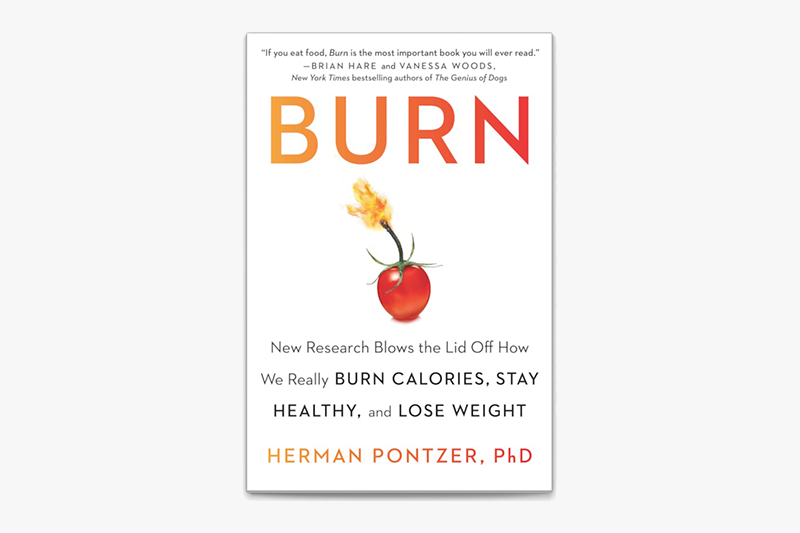
I recently had the pleasure of reading Herman Pontzer’s book, *BURN*, while enjoying a relaxing vacation in Cancun, Mexico. As I progressed through the book, my vacation goal of using the treadmill in the morning to make room for nachos and non-alcoholic beer under the big beach umbrella in the afternoon became somewhat of a joke between me and my husband. My long-held belief that calories out make room for calories in, which I often used as a selling point during my 29 years of teaching fitness, was debunked in just a few days.
Early in my career, I learned about the Set Point Theory, which refers to the number of calories needed to maintain a person’s weight. I understood that consuming calories beyond this set point could lead to weight gain. However, I also believed that exercise could help counterbalance this set point. For example, if I indulged in dessert, I thought I could simply hop on the spin bike or treadmill to make up for it. I often told participants in my classes, “Don’t beat yourself up for indulging! Just take my class!”
However, according to Pontzer’s Constrained Energy Theory, exercise has a minimal role in maintaining weight. The body compensates for the additional energy burned by increasing appetite or slowing its metabolism with long-term exercise.
This realization was incredible! I couldn’t believe it. My husband was so excited by this news that he kept joking by saying that “exercise is bad for you.” I had never seen him enjoy Mexican food and chocolate like this before, and I was amazed to see him sitting under the umbrella for eight hours. He used to take long walks or join me at the gym, but now he felt liberated. “It doesn’t matter as long as I stay within my daily energy expenditure,” he would say. Despite his joking, I refused to believe that exercise was “bad” for you, so I continued reading to prove myself right.
Herman Pontzer emphasizes that we are not simply machines operating on a calories in, calories out principle. While exercise is not essential for weight loss, one of its primary roles is to help regulate appetite through the hypothalamus. He goes on to say that participants from the tv reality series, “The Biggest Loser” who engaged in regular exercise were more successful at maintaining their weight loss compared to those who did not exercise. Pontzer suggests that this success may be attributed to exercise’s ability to reduce brain inflammation, which can impair the hypothalamus’s capacity to manage metabolism and disrupt the balance of ghrelin and leptin—hormones that regulate appetite.
To understand Pontzer’s Energy Constraint concept more clearly, think of our energy system as a bank account. Each day, we receive a specific amount of “money” to meet the energy needs of our thirty-seven trillion cells. If we spend more than this allocated amount, we gain weight. On the other hand, if we spend less than we have, our body, regulated by the hypothalamus, must find ways to obtain more “money” for essential bodily functions.
About 60% of our energy expenditure supports vital functions, termed Basal Metabolic Rate (BMR), which is the energy used while at rest, excluding eating or movement. The rest covers thermoregulation, immune function, growth, and reproduction. Herman’s book includes formulas to calculate both BMR and Daily Energy Expenditure.
Suddenly, everything started to make sense from my perspective! I have always been amazed at how hungry I feel the day after a challenging 8-mile hike. When I’m hungry, I really eat! My hypothalamus sends signals to replenish my energy stores so I can effectively do my job.
You might wonder what happens if you ignore your body’s signals to eat after a strenuous workout. While it could potentially lead to weight loss, neglecting these signals may also impair essential processes, such as your body’s ability to fight off a virus you might have picked up on your flight home. In my opinion, the potential risks outweigh any benefits, so I prefer to heed my body’s signals.
I’ve come to realize that exercise may not play a significant role in weight loss, prompting me to reevaluate my teaching methods. To effectively promote weight loss, the focus must be on reducing caloric intake and managing energy like a “bank account.” However, I can still provide enjoyable exercises that contribute to overall health. And on a final note, I recommend prioritizing whole foods over processed ones, as processed foods can lead to overeating.
Author
-
View all posts
Shelley Russell has been a fitness instructor since 1996. She pivoted to live streaming her classes in March 2020 to support the health and wellness of her family and friends during the pandemic. This transition led to the creation of FITT1IN, her innovative fitness enterprise that offers both live and on-demand classes accessible for a week. Follow her on Instagram: @fitt1in.