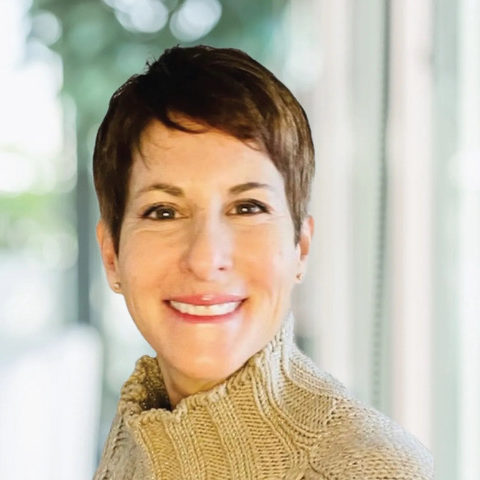
Interview with Amy Goldberg
Photography by Jerri Graham
You may recognize Stephanie Szostak from your screen, luminous, layered, and unforgettable as Delilah on A Million Little Things, or Jacqueline in The Devil Wears Prada, or maybe as Brandt in Iron Man 3. But behind the roles and red carpets is a woman who dared to do something rare in this world: tell the truth about herself, to herself.
Born in France and once headed for a traditional path in marketing, Stephanie’s life took a series of unexpected turns, from working at Chanel to modeling at 26, to acting in her 30s, and ultimately, to authorship with her book Selfish: Step Into a Journey of Self-Discovery to Revive Confidence, Joy and Meaning.
In this deeply personal interview, Stephanie shares the courageous path of unbecoming, how she learned to prioritize inner peace over perfection, and why being “selfish” might just be the most generous thing a woman can do.
You titled your book SELF!SH that is quite bold, unapologetic, and a little provocative. What does that word mean to you now, and how has it changed your life?
Hi Amy! Thank you for having me. The word was suggested to me by Little Big Brands and when I first saw it, I thought, “well it won’t be that!” But the more I saw it – the more it made me think—one of the most important relationships we have is the one we have with ourselves. To be Self’ISH makes sense. (Pronounced “SELF-ish”), it isn’t about being self-centered and not considering others rather it’s about first taking time for ourselves, to “do the work” on ourselves—to gain self-awareness, learn tools to manage our thoughts and emotions—so we can show up better for those around us. Like when you are on an airplane and hear the reminder that if the oxygen mask falls “secure yours before trying to assist others”–that is SELF’ish.
How it’s changed my life? It’s given me a unique mental fitness tool that I use every day for my mindset—my SELF!SH Playbook. What the heck is a Playbook? It’s a sort of personal “best of” reservoir for me, created by me. The hardest part of personal growth for me is forgetting. I don’t remember well, especially in moments of stress. I read a great book, listen to a great podcast, watch an amazing TEDTalk, and the message feels life changing but then a couple of weeks later, I get back to my daily routines and I forget. My Playbook helps me revisit guidance, wisdom, and personal inspiration every day. It’s mental conditioning. Resilience training. It’s like doing reps at the gym, except those reps are for my mental strength.

From Chanel to modeling to acting, and now author. Did you feel like you were chasing something… or shedding something?
Fun question Amy – It was a little bit of both. After college I was chasing a job. I got lucky to find one, and a great one at Chanel in NYC. 9 West 57th Street. An iconic building, and in many ways, it was a dream place to work for as a twenty something year old. Panoramic views of Central Park, fashion, glamour, sample sales and… Free access to the makeup closet!
But something was missing. After two and a half years, I remember seeing my bosses day-to-day and feeling the monotony of the corporate environment and felt ready to start exit the rat race.
I had an opportunity to do some modeling. So, I chased that. I do remember thinking, this isn’t it… but it’s exciting, a little crazy and maybe I can make some money while I figure out what it is that I really want to do.
Eventually, modeling led me to do commercials and then to the idea of taking an acting class. It took me three years to get the courage to finally sign up for a theatre class (at age 29). And what do ya’ know?! It was there that I discovered that I have a passion for something—playing pretend.
Now I was really “chasing something”—that feeling I got doing scene work in acting class made me feel alive inside. I wanted more. I wanted to explore. I wanted to push myself and keep doing the thing that made me feel connected to the truth of who I was and to something bigger than me all at the same time.
You didn’t start acting until your 30s. How did you quiet the doubts and leap into such an uncertain world?
This wasn’t easy and it is still a challenge. At the time I just leapt because I felt I had to. Acting made me feel alive inside like nothing had before. I didn’t know this would become a career, I just knew I had to pursue it because I loved it so much. I had no connections, no agent, no clue how the business worked. To most people around me, it seemed a little nuts. One friend asked my husband when I was in Kiev, shooting a short movie that didn’t pay anything, “What is she doing? Does she think she is going to end up in Hollywood or something?”
I was also lucky to take those acting classes with Sondra Lee—she was a hard *ss teacher. She laid into me early on. Her style was brutal and filled with active humiliation. But she pushed me. Her toughness eventually shifted into tough love—and that helped me believe in myself just a little more.
All of that motivated me. The negative reinforcement drove me to develop a kind of defiance, a “Watch me B*tch” attitude. But all along the doubts were there, at times paralyzing. Uncertainty was very present. How I learned to deal with the uncertainty is the genesis of my book SELF!SH.
What was the moment you realized you were out of alignment with yourself, and how did you begin the journey back?
The key moment was ten years into my acting career—ironically, at a time when things were really picking up. I was working on a big film in Boston, with Kevin Bacon, Jeff Bridges, playing Ryan Reynolds’ wife… and I was riddled with anxiety, overwhelmed by self-doubt, and fear of “everyone” thinking I wasn’t good enough. Oddly enough I think it stemmed from getting praise (from my manager, agent and the casting director) – I know this makes no sense and it really doesn’t. It’s just that for ten years I was driven by that “Watch me prove you all wrong attitude” so when I sort of “arrived” I felt lost. What fueled me before wasn’t working anymore. And, I didn’t have the right tools in place to navigate this new environment. I felt so green compared to everyone else and I felt completely out of alignment. For me that translated into: editing who I was, what I said, how I behaved, just to try to fit in. It’s a miserable feeling. I was paralyzed mentally and emotionally. I felt I couldn’t be mySELF (not ‘ish)
My initial journey back to my ‘self’ started on a train ride from Penn Station back to Boston where we were filming. I randomly bought a book by Deepak Chopra called “The Seven Spiritual Laws of Success” for the ride and when I reached Boston, I’d finished the whole thing, called my husband and said, “I just read a book that’s going to change my life.”
This book spoke to my heart. I realized all these “Laws” were so important to me and all were missing from my life. I wasn’t living by any of them. I was driven by fear, not by values, completely out of alignment with myself, like you said.
On my way to my hotel, I bought some flashcards and created SEVEN flashcards for myself to flip through every morning before I would go on set. It was my first version of a Playbook. A way to ground myself, start the day with these reminders and intentions. This book was the beginning of my journey… not back… but forward with less fear and judgement and more compassion, gratitude, and courage.

You’ve portrayed complex, often emotionally charged characters. How do you separate the roles you play from the person you’re becoming?
Characters always seep a little bit into you during filming… But I’ve learned to notice it and keep reality separate from fiction. When I was younger, I’d indulge, stay in character, obsess. But once I had kids that changed. Reality was all too important. I wasn’t the center of my own existence anymore (neither was my career). Plus, my kids would sniff my “acting” a mile away! I remember trying to practice my American accent at home and they’d say “Mom… stop trying to sound American. You’re being weird.” That’ll snap you right out of it and bring you right back to where you need to be.
What wellness practices keep you grounded when your schedule or emotions feel chaotic?
A mix of physical, mental and spiritual practices. It’s really about having a toolbox—a range of practices I can choose from depending on the day, the mood, or the moment. Practices I’m consistent with to help manage thoughts and emotions are watching my Playbook, writing in the Five Minute Gratitude Journal, reading The Daily Stoic daily, and TM meditation—they all help keep perspective, bring calm, quiet the noise and remind me to focus on what’s in my control. I’ll also add journaling (dumping it on the page!!), working out, walking in nature, breathing and voice exercises (try this warmup from the National Theater before public speaking or a big event!). Others I love are Yoga Nidra (Ally Boothroys on YouTube), TRE (Trauma Release exercise), Chi Ghong (by Shaolin on YouTube), and just dancing and singing alone.
That said—I’m far from perfect. When things feel especially chaotic, I can sometimes skip the very tools that help me most. I’ll get caught rushing, allowing overwhelm, and that little voice will say, “Screw it, you don’t need it today.” And sometimes I listen. But eventually, I find my way back. And every time, I’m reminded why I do these things: because I feel so much better—and life feels so much more manageable—when I do.
Confidence is a thread in your story. What did losing and then reclaiming confidence teach you about worth?
I recently learned a new definition of COURAGE from artist Peter Tunney: the quality of mind that enables one to face danger with confidence. For me, confidence comes and goes. And I think that’s natural. Self-doubt is part of being human. It shows up when I’m parenting, acting, the hour before an audition, before a meeting, a party, or a round of golf. I think self-doubt can be healthy. It keeps me humble, drives me to prepare and makes me question assumptions. All of that can be productive. Accepting the self-doubt and still being able to move forward, that takes a little courage.
Self-worth is different. I used to tie my self-worth to outcomes—how I performed, what people thought, what I accomplished. But I’ve learned to nurture it instead from within. I reconnect to it by slowing down, turning inward, and remembering who I am—what I stand for, the values I strive to live by, and how I want to show up for others. (That’s what SELF’!SH is all about: reminding ourselves daily.)
I also love the idea that self-worth isn’t something we earn—it’s part of being human. And while it comes from within, it’s not a solo journey. When I remember to focus on listening, kindness, and giving instead of being focused on my own results… when I remember our shared humanity, I tend to feel more grounded. More connected. More at peace.
And when that happens? Confidence usually follows.
Was there ever a time you felt like you were living someone else’s version of your life? How did you course correct?
Growing up, I think I unconsciously stepped into the role of “the good girl.” My older brother was struggling with heroin addiction, my parents were under a lot of stress, and I think I responded by following the expected path—staying out of trouble, doing what was right, not rocking the boat.
But when I started studying acting, all these bottled-up emotions and memories came flooding back. It felt like an existential crisis—like I had abandoned myself somewhere along the way.
Course correcting came slowly. It started with therapy. With learning how to open up to my husband and let myself be vulnerable. It came from trying new things—like yoga and meditation—and caring a little less about what other people might think.
Change is hard, especially when you’re young. You worry that your friends will judge you. But my amazing therapist at the time, Jay, helped me see something important: when we’re afraid of others’ judgment, it’s often because we haven’t made peace with that part of ourselves yet.

In your book, you talk about joy. What brings you joy now that your younger self might have overlooked?
I’ve always found joy in the little things. I’m often in awe—of nature, the sky, the way the leaves change, the sound of the wind through the trees. Art. My morning coffee. The small, beautiful things we’re surrounded by if we pay attention.
But one thing I may have overlooked when I was younger is speaking to strangers. I was very shy, and a bit closed off. People often told me I appeared guarded.
Last night, I was at a party, and a friend of mine said, “You should meet this woman—I’d introduce you, but I just talked to her for 30 minutes and don’t feel like going back there.” So, I said, “No worries, I’m a big girl, I can go over and say hi.”
What followed brought me joy. Approaching two strangers. This woman and her boyfriend. The clumsiness of introducing myself. Seeing her trying to figure out why I’d just interrupted them. Me figuring my way into that clumsy situation. Having fun with it. And then, the shift: the conversation moved past the cocktail chatter. We opened up to each other about parenting, teenagers, work, relationships. Everyone took a little leap. Everyone showed up.
So, I guess one answer is this: receiving the gift of someone opening up to me—that brings me joy. I didn’t appreciate that when I was younger.
What advice would you give to women afraid to “start over” in their 30s, 40s, or 50s?
I’d say: Give yourself permission to pause—and explore your past, your present, your future.
Take yourself through the process of self-discovery. Carve out time to really look at your life—the hard things you’ve faced, the things you’ve accomplished, the things you’ve survived.
They’ll remind you of just how strong you already are—and give you the courage to move forward. You’ll reconnect with the wisdom that carried you through past tough chapters.
You’ll craft a vision for your future that feels clear, grounded, and close to your heart.
And with that kind of clarity? You’ll feel energized.
You wouldn’t start a business, a road trip, or even a new recipe without a plan.
So why start a new chapter in life without one?
How has your relationship with your body and wellness evolved across the years — as a model, actor, and now author?
As a model, I struggled to feel comfortable in my body and in front of the camera.
As an actor, I learned to breathe and use my body as an instrument and that helped me feel more at ease in my own skin.
And, typing away on my computer when I wrote my book or now as I’m answering this, I spend hours glued to my chair. I get tense. I forget to breathe, to drink water. It’s not great for creativity—or my body. I’m learning to take breaks, stretch, hydrate… to care for my body as part of the creative process.
Ultimately, I’ve come to realize that caring for my body is tied to caring for my mind and my spirit.
If you could whisper one truth to every woman feeling lost or small, what would it be?
Dare to go after your truth—with love and humor (it’s my life philosophy, and it gives me courage every day.)
The whisper I would encourage would be to try coming up with your personal life philosophy. You have all you need inside you to restore your sense of worth and purpose… all it takes is giving yourself the time and space to uncover it.
Thank you, Stephanie, for showing us that the journey to confidence begins not with perfection, but with presence. I’m grateful for your time.
Wow, Stephanie reminds me that the most beautiful transformations happen not under the spotlight, but in quiet moments of radical honesty. She’s lived many lives, on camera and off, and through it all, she’s chosen truth over approval, meaning over noise, and self over spectacle.
Her story isn’t about reinvention, it’s about reunion. A reunion with who she’s always been.