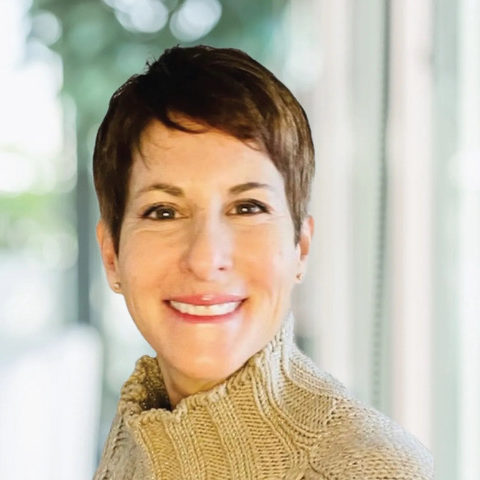
An interview with Amy Goldberg
We often hear that youth is where the story begins. But for Helen Xenidis, the most powerful chapters of a woman’s life are written in midlife and beyond. As the founder of Once Upon A Woman – Her Story, Helen is rewriting the narrative about aging, with truth, beauty, and unapologetic boldness.
She’s a mentor, visionary, and fierce advocate for women stepping fully into themselves. Helen invites us to see this stage not as an ending, but as a stunning beginning, where confidence is our compass and wisdom our superpower.
Helen shares with us what it means to age with fire in your soul. What unfolded was deeply honest and empowering insights on reinvention, visibility, and the freedom that comes when we stop shrinking and start showing up.
Your journey through midlife has been anything but ordinary. Where did it all begin for you, and what was the turning point that set you on this path?
On my 40th birthday, I was crushing life. I partied like a rock star in New York City and thought I had it all figured out. Four short years later, on April 4, 2009, everything shifted. I took a nap and woke up to a voice I’d never heard before. It said, “Helen, if you don’t change the way you’re living, you’re going to die.”
I sat up, startled. Then I heard it again, clear as day: “Helen, if you don’t change the way you’re living, you’re going to die.”
I don’t know if it was a dream. I don’t know if I was awake. But I knew it meant something, and I had to listen. That was the moment I started examining my life with brutal honesty, the choices I’d made, who I had become, and the woman I wanted to be moving forward.
You often say midlife isn’t a crisis but a calling. What did that “call” look like for you personally, and how did it change the way you lived your life?
At first, I thought it was about my health. When I heard that voice telling me I had to change or I would die, I assumed it meant something physical that I’d collapse from a health issue if I didn’t turn things around. But I quickly realized it wasn’t that simple. The message was deeper.
That voice was calling me to examine everything, who I had been, why I believed the things I did, and whether those beliefs were really mine or ones I had inherited from my family and culture. I started asking myself hard questions: What do you actually like? What don’t you like? What do you want to believe now? What no longer fits?
From there, I began experimenting. I took courses, tried new experiences, and deliberately put myself into situations that were outside my comfort zone. It was about peeling away expectations I’d carried for years and discovering who I truly was at this stage of life.
I don’t see midlife as a crisis. To me, it’s an awakening. It only becomes a crisis if you ignore it, if you shut down what’s bubbling up instead of listening to it.

Looking back, how did your views on aging shift from those early restless years to where you are today?
Life is long until it isn’t. In my 20s, 30s, even into my 40s, I was living for the moment. I had a good job, great friends, and a busy social life. I partied several nights a week, and I kept moving. But I wasn’t thinking much about the future or about who I really wanted to be.
A lot of that came from being an immigrant daughter living between the expectations of others and my own dreams. More recently, being diagnosed with ADHD has helped me understand those years in a different way. It explained why things like planning, structure, and even finances felt harder for me, even though on the surface I looked like I had it all together.
Now, I see life differently. There are fewer years ahead of me than behind me and that reality is a gift. It sharpened my focus. These days, instead of late nights partying, it’s early mornings with journaling and CrossFit. I don’t want to waste time. If there’s something I want to try, I go for it. If I fail, so what? Failing means I had the courage to try. Not trying at all, that’s the real failure.
What part of your own story did you need to claim or rewrite first, before you could step into the woman you are now?
The first thing I had to claim was my voice. For years I was doing a half-assed job of what I thought would make everyone else proud or struggling to figure out how to show up for myself without disappointing them. I played the role of the good daughter, but the truth was I had never fully claimed my own voice or decided who I wanted to be.
That wake-up call in 2009 forced me to admit this wasn’t working anymore. Claiming my voice meant asking myself what I could believe in and what I could not, and what I was no longer willing to accept. It meant letting go of some of the beliefs and traditions my parents instilled in me and deciding what I wanted to keep and what I needed to release.
Once I claimed my voice, I could finally begin rewriting the rest of my story on my own terms.
Many women in midlife feel invisible or “past their prime.” What helped you reconnect with your sense of worth and visibility?
For me, invisibility came when I couldn’t see myself. When I didn’t feel my value or my worth, I disappeared — even if nobody else noticed it from the outside.
The more I stepped into my truth, the more visible I became. I started exploring different sides of myself, taking courses, trying new things, and putting myself in places where I could learn who I was beyond the roles I had played.
The first course I signed up for was a university-level writing class, and I quickly realized I was surrounded by literal geniuses while I was writing like a third grader. I was embarrassed, but I accepted that my level was different, kept showing up, and focused on doing better in my own capacity. Quitting wasn’t an option. I knew I had to move forward.
And with every step, even the humbling ones, I felt myself becoming more visible.
Funny enough, even embracing my natural curls and my greying hair made me feel more visible. I love aging. It feels freeing, and it’s a way of saying, here I am, all of me.
I think a lot of women in midlife get lost. They get lost in prioritizing careers, marriages, motherhood, or in chasing a version of youth that doesn’t fit anymore. We stay busy, but we don’t always stop to hear the questions that are bubbling up. We don’t take the time to really self-examine. We try to carry on as things are but this is a time of change and transformation, and it requires our attention.

How has sisterhood and community shaped your journey through midlife?
Even the way I define sisterhood has changed. When I was younger, sisterhood meant my immediate circle of friends and the women in my life. Now, sisterhood includes all women everywhere. It’s about being united on our journeys, whatever they are, and learning from each other.
When I started surrounding myself with women who were open, supportive, and willing to share their real stories, I realized how much strength we give to each other just by showing up. But that only happened because I was willing to share my own stories honestly and vulnerably.
CrossFit and roller skating, along with putting myself in spaces with women of all ages, opened my eyes to the power of connection. Cheering each other on across different generations and backgrounds has been life changing. It’s shifted the way I see aging, the way I see my future, and the way I see the women around me. Today I am braver, bolder, and more willing to step into new chapters knowing I am not alone.
You talk about “aging boldly.” What does that really look like for you on an ordinary day?
For me, aging boldly means thinking less about my actual age and more about what I’d like to do with my life. Since that wake-up call in 2009, I’ve tackled all kinds of things. I took classes in writing, improv, stand-up comedy, boxing, pilates, yoga. I’ve travelled to South Africa, Turkey, India, Bali, Morocco, and more.
I don’t stop to ask, “Can I do this at my age?” I ask, “What do I want to try next?” At 55, I got on stage and entered my first speaking competition. At 57, I decided to try roller skating. At 58, I joined CrossFit and never looked back and at 59 started Once Upon A Woman – Her Story, a live story telling event.
To me, aging boldly is about walking into new rooms and letting myself belong wherever I go. Midlife, in my opinion, is the creamy centre of the Oreo cookie, the best part, and meant to be savored.
What lessons do you believe younger women can learn from those of us in midlife? And what reminders do older women need to hold onto?
I think the first thing older women need to let go of is the automatic assumption that just because we’re older, we’re wiser and have more to offer. Yes, we carry wisdom, but younger women bring fresher ideas, new energy, and different ways of looking at life. They help us stay current, open, and energized.
The truth is what we offer each other is mutually beneficial. Younger women have experiences I’ve never had, and I can learn from them just as much as they can learn from me.
What I want younger women to know is not to fear midlife or aging. Society does a great job of scaring us into thinking that once we’re no longer young, we’re no longer relevant. But the reality is that aging gives us the chance to step into our most powerful years. We take everything we’ve learned in our twenties, thirties, and forties, and carry it forward. That’s when we get to grow into newer, bolder versions of ourselves.
And as I’ve gotten older, I’ve realized in a lot of ways I’ve become “the aunt you wish you had.” I love hearing what younger women have gone through, and I try to offer them truth, not sugar-coated advice, but the real stuff I wish someone had said to me when I was younger.
Only after doing your own inner work did you create Once Upon A Woman – Her Story. How did your personal journey shape the platform?
Once Upon A Woman is really an extension of everything I’ve learned. My own journey showed me the power of asking hard questions, sharing honestly, and stepping into rooms where you can be seen for who you really are. That’s what I wanted to create for other women.
It’s about bringing women of all ages and backgrounds together in one room to share their stories boldly and honestly. I believe that when women speak their truth in a supportive space, it not only frees them from shame or invisibility, it also empowers everyone listening. We learn from each other, we see ourselves in each other, and we leave stronger than when we arrived.
Why do you believe storytelling is such a powerful tool for healing and empowerment especially for women in midlife?
I’ve learned that shame loses its grip when stories are told in safe spaces. For so many of us, the hardest parts of our lives are the ones we’ve kept hidden. But the moment we speak to them out loud, something shifts. What once felt like a weakness becomes a source of strength.
Storytelling is powerful because it’s not just about one woman’s truth, it’s about connection. When a woman shares her story honestly and vulnerably, everyone in the room sees a piece of themselves in it. That recognition is healing. It reminds us we’re not alone, and it gives us permission to own our own stories more boldly.
For women in midlife especially, this kind of storytelling is transformational. We’ve lived enough life to carry scars, lessons, and resilience. And resilience isn’t about pretending things didn’t hurt or that we bounced back overnight. It’s about finding the courage to keep moving forward with those scars and still creating a full, meaningful life. When we share our stories, we remind each other of that strength. We show each other that falling down and getting back up is part of the journey and that we can step into this stage of life with confidence instead of fear.
Have you ever felt resistance from society, family, or even yourself in stepping into leadership at this stage of life? How did you move through it?
I can honestly say I’ve never felt resistance from society or from my family or maybe my own resistance overshadowed anyone else’s. That fear that shows up when you step into something new.
What I’ve learned is that courage is like a muscle. The more you exercise it, the stronger it gets. Every time I try something new and prove to myself that I can do it, I build the confidence to keep going and to keep stretching into new spaces.
I trust myself, and I trust that the worst thing that can happen is I might fail. And failure never killed anybody. It just means you either try a different way or move on to something else. If it matters enough, you keep going. For me, that trust has made all the difference in stepping into leadership and visibility at this stage of my life.
Your idea of wellness has evolved over time. What practices physical, emotional, or spiritual are non-negotiable for you now?
Journaling is huge for me. It helps me clear the mental clutter and start my day with focus. I still enjoy spending time with others, but my time alone is invaluable. Wellness, for me, is about knowing what I need and honoring it.
CrossFit has become the practice that grounds me the most. It’s not about how my body looks anymore; it’s about how it works. Strength and ability matter so much more to me than appearance. Every time I walk into the gym, I’m reminded that my body is strong, resilient, and capable of more than I thought possible.
I won’t pretend it’s always easy. I have arthritis, and aches and pains. There are days I don’t want to go, and days I don’t. But I keep showing up, and the payoff is incredible. I love feeling stronger and setting goals that push me forward. Right now, I’m chasing a deadlift milestone. Maybe not the 300 pounds I first imagined for this year, but 250 or even 275 is in sight, and I’m proud of that.
CrossFit has changed the way I see myself. It’s given me courage, community, and confidence that extends far beyond the gym. Between movement, reflection, and listening to myself, I feel more grounded at this age than I ever have before.
Helen Xenidis reminds us that aging isn’t something to endure, it’s something to celebrate. Through Once Upon A Woman, she’s not only giving women permission to own their stories, she’s giving them the tools to tell them boldly.
In her presence, you feel what’s possible: that we are not fading, we are rising. That the years ahead can be our most daring, dazzling, and defining yet.
Thank you, Helen, for showing us the power of becoming, at any age.