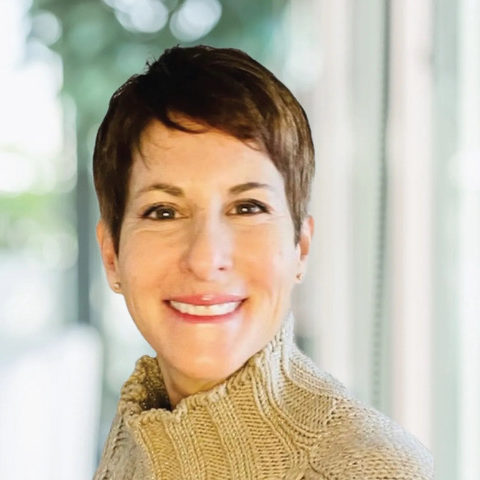
Grief, grit, and building The Matthew Perry House—Caitlin Morrison’s mission for real change.
When Caitlin Morrison lost her brother, the world lost Matthew Perry, an actor, advocate, and deeply human soul who made millions laugh while bravely speaking out about addiction. But for Caitlin, the story didn’t end there.
In the months that followed, Caitlin chose to turn her grief into action. She launched The Matthew Perry House, to carry on her brother’s mission: to mitigate the social and economic impact of addiction by funding emerging research and providing vital post-treatment support for those living with substance use disorders.
In this conversation, Caitlin opens up about grief, resilience, and what it means to heal while creating lasting change. She shares why post-treatment care is a game-changer, what gives her hope, and how leading this foundation is reshaping the narrative around addiction in Canada.
Let’s start with what’s real, how are you really doing right now, in the middle of everything you’re building and holding?
Amazing how the word “really” kicks that question up a notch. No stock “great” or “hanging in there” responses then? On any given day, I am somewhere along a spectrum. On one end, I am all joy. I adore my children. I live in such a beautiful place I have to pinch myself when I wake up every morning. I actually look forward to work because it is fulfilling and it feels big and impactful. On the other end of the spectrum lives all my anxiety and fear. Do my kids feel abandoned when I travel for work? Will I ever catch up on emails? Will someone realize that I am a complete professional fraud and have no business being the executive director of anything? Happily, I spend more time at the joyful end of things.
The Matthew Perry House is such a powerful way to honour your brother. What did that first moment of “we have to do this” feel like for you?
To tell the truth, I didn’t step into this work wanting to honour Matthew (Manew). I started doing it selfishly. He was always a center-of-my-universe kind of person but when he died, he was literally all I could think about. If I had stuck to working in some other organization, I would have spent all day distracted by this sort of constant obsessive thinking about something else. Working on something based on him gave me permission to stay obsessed.
When I was presented with the idea of Matthew Perry House (the place), I knew it was perfect. But I thought there was no way we could do it. We were in month two or three of figuring out what the organization would do. We couldn’t get into a major capital campaign. That would be nuts! But the pieces started to come together almost against my will. I marveled at the magic of it, but I still resisted out of a need to be reasonable and cautious. Then, as I was driving with my sisters to the official organization launch weeks after that first presentation, I told them I was worried no one would come or I would do something embarrassing. My youngest sister, Mado, said “Caitie. What’s the worst that could happen? The worst thing has already happened.”
That’s when I knew. We have to do this. Too many things like this have probably not happened because people were trying to be reasonable and cautious. There was too much magic to ignore. I felt excited and committed at that moment. Neither feeling has faded since.

Healing isn’t always soft. What has grief taught you about grit—and what’s kept you moving forward when it’s been hard to?
Weirdly, grief itself hasn’t been the hardest thing. There have been quite a few times when that sad, empty loss feeling has struck me without warning, and I have burst into embarrassing fits of sobbing in completely inappropriate situations. But those moments aren’t hard. If anything, those are cathartic.
The hard moments happen when I am in a bright sunny day kind of a mood and someone (usually someone I am just meeting for the first time) will hit me with that sympathetic look and soothing voice. It comes from a loving place, of course. They want to offer support and understanding. Those aren’t the things I feel.
First, I feel guilty. Maybe I should be sadder? Was it selfish to bask in a happy feeling? Am I a bad sister for doing anything other than wearing black and sitting in mournful reflection?
Then, I feel angry. Why do other people get to make assumptions about how I am feeling?! How unfair is it that I don’t get to keep my loss to myself until I am ready to share it with someone? Why is this stranger forcing me to play-act sadness, so I don’t look like a callous arse?!
Those were the only moments that ever really threatened to stop me from moving forward. I had to learn how to escape from that grief-anger loop because it really could derail a whole day or more.
What I learned was that I had to give myself permission to feel anything anytime. I also had to appreciate the love behind people’s assumptions and return that love. Corny as all get out, I know, but it works.
Matthew was known for telling the truth about addiction. What truth are you trying to tell through the Foundation’s work?
A lot of it is the same as what Matthew was trying to tell. Addiction isn’t a moral failing—it’s a disease (I’m using the word he used here. It’s not a preferred language among organizations. Please don’t write an angry letter to the editor). Don’t try to face addiction alone. Don’t give up. If you try and fail—try something else.
He told some pretty excellent truths.
I’ve added a couple of things. For people who love someone who lives with an addiction, I want them to know that it is okay to be worried and pissed off at the same time. I want them to know that they deserve support, help, and community every bit as much as the person they work about.
I also want to tell the truth about a health care system that doesn’t approach mental health with the same reverence as bodily health. Got physical pain? Right this way. The doctor will see you and do what they can. Don’t worry; it’s covered by your health care plan. Got unbearable emotional pain that is so bad that you can’t cope with living? What a loser. Let’s go to the other side of the street, kids…that crazy person is smelling and unpleasant.
When the health care system is set up so that mental health is seen as unimportant, it doesn’t just leave mental health concerns untreated. It exacerbates mental health crises. It validates the kind of stigma that places blame on the sufferer. It makes care inaccessible to many people who need it and makes those who can access it, too ashamed to seek it. And what happens when professional care is stigmatized and unavailable? People treat themselves with medicine like alcohol, drugs, gambling, and self-harm.
In case readers couldn’t picture my invisible soapbox, I am big on telling truths that expose what is missing in systems and encourage people to demand better access to mental health care.

You focus on post-treatment wraparound care—a piece that’s so often missing. Why does that part of the journey matter just as much as the treatment itself?
Talk about a question that begs for a two-million word answer. Here’s the short version.
Almost no one seeks treatment just because they feel a compulsion to use a substance and they want to break the cycle of use. The treatment journey usually starts from a very dark place in life—a place where relationships have been destroyed, finances are in shambles, and overall health is critically threatened. During treatment, a person will “get dry.” They’ll learn about going to meetings. They’ll get some talk therapy. But then they leave.
While in treatment, the world outside doesn’t change. A month or a few months later, a person has to leave the safety of a treatment centre. And outside the doors, they find all those broken pieces of life are still broken (usually with a 5 or 6 figure bill to manage on top of everything else). “But, you’re better now right?” everyone says. “You can fix all of that.” As if it’s easy to do.
It’s hard for anyone to restart a career or rebuild after financial loss. Addiction or not, the prospect of starting from scratch (not to mention having to work to get to scratch in the first place) can seem overwhelming. It can seem damn near impossible. Addiction just adds a level of difficulty. Because the newly sober brain, neuroscientists know, cannot produce the chemicals that make a person feel okay or happy. It can take years for the brain to start producing those chemicals naturally after sustained substance use. For a newly sober person, there is only one thing that can make them feel the emotion of happiness the way most of the people reading this experience that emotion: the substance they used. And their inner monologue will remind them of that fact thousands of times a day.
Longer term wraparound support means that people can rebuild their lives with support. They can repair relationships, get careers back on track, get back on stable ground in every aspect of life before they are sent out on their own. And when they do go back into that more stable life, the time spent rebuilding things in a supportive environment will have given their brains time to renew those natural chemical pathways. They can go back to a life they are proud of and feel the emotion of pride at the same time.
“That’s the short answer?!” Yep.
The Foundation is also investing in emerging research. What breakthroughs—or even small ideas—are giving you real hope right now?
We aren’t doing this quite yet. It’s a future thing. But there are some really exciting things happening in the research world. rTMS (repetitive brain stimulation with magnets) is showing promise in helping brains re-learn how to make those good emotions. It has been very successful as a treatment for chronic depression and is showing amazing results related to addictions treatment as well. DBS (surgical implantation of electrodes in the brain) is kind of like the heavy-duty version of rTMS. While the brain surgery aspect of this is invasive, it has been nothing short of a miracle for some people. And medically supervised use of psilocybin (magic mushrooms), ketamine, and similar substances is also showing incredible results in depression and addictions treatment.
When you think about wellness in your own life, what does it actually look like now? What do you have to protect, let go of, or lean into to stay well?
I have three rules I try to follow. They work for me, as evidenced by the fact that I feel mentally and physically amazing despite a lot of could-be stressors happening every day. I’m not suggesting these rules will be helpful to anyone else, but they work for me.
- Don’t go a day without sweating. Doesn’t mean I go to the gym every day (far from it). Sometimes, we’re just talking about vigorous gardening or house cleaning. Sweat just makes me feel like I worked hard and accomplished something, I guess.
- Air out problems. I always take a bad mood outside. If it’s nice out, it gives me something pleasant to focus on. If it’s horrible out, I get too cold or wet to remember what put me in a bad mood.
- Tell the truth always. I think my mental wellness depends on complete honesty. It means I never have to sit in my unspoken feelings or worry about “being found out” about something. And people can’t help you if they don’t know the truth. Actually, thinking about it now, I think I started chronically telling the truth because maybe life would be better if I improved my character a bit. Then I ended up realizing that admitting to being lazy or dumb or selfish at times actually makes people want to hang out with you more than when you have good reasons for everything. And hanging out with good people makes my life better

This work is so mission-driven—but also deeply personal. How do you stay connected to purpose without burning out or losing yourself?
I don’t. I burn out and lose myself all the time. But then I quickly tell someone I’m feeling burnt out or lost and whoever I tell will help me by insisting I play hooky for the day or by taking a walk with me or by listening to me scream and cry about it for a while until I feel better. I try to do the same for the other mission-driven people I know, but they do a better job at it.
We love spotlighting strong, visionary women. What have you discovered about your own strength since stepping into this role?
I have always been visionary because I like to dream and think big. I also am about as strong as any woman. We all have to be a bit strong in this world. But I have always buried those things under mountains of self-doubt and imposter syndrome. This role forced me to ignore the mountains. I didn’t have time for them. I can’t get to half my emails. How am I supposed to make time for mountains of confidence issues?
Once I took the doubt away from the strength part and saw how a lot of people seem to like my particular way of dreaming big, I started to feel a bit more visionary and a bit stronger. We all have that stuff in us. It’s just really hard to dig it out of hiding. I’m lucky that something that meant a lot to me took all the choice out of it. I’d still be under those mountains otherwise, and those suckers were heavy.
The response to the Foundation must be powerful. Is there a moment—an email, a hug, a story—that reminded you this work matters more than ever?
There are way too many stories and hugs and emails like this. One stands out. Several months ago, someone suggested I check out a video made by a woman named Tina. In it, she talks about her son, Justin, a remarkable young man who lost his battle with addiction. It wasn’t the first time I heard a story of loss. It won’t be the last. But there was something about this particular story. I felt like I had known Tina a long time. I felt like I lived her loss with her. A few weeks ago, I got to meet her in person when she was getting an award for her work in the community. I got to give her a hug. What she did in the face of her family tragedy was superhuman and inspiring, but she shouldn’t have had to do any of it. No mum should.
Here’s the link to the video if you need a good cry: JUSTIN’S ADDICTION STORY: No Family Is Immune

And speaking of powerful moments—you’ve got a big fundraiser called LIVE LOUD LIVE coming up on November 14th – a collaboration with Make Music Matter. What can people expect, and how can they show up in support?
Surface level, they can expect a great night of great music. This is a coming together of artists, any of whom I would want to see live, for one night on one stage. It’s going to be fun, celebratory, and full of surprises and amazing music. It will also benefit Matthew Perry House and Make Music Matter, two organizations doing really good work in the world. Yes, I tooted my horn, just there.
Below the surface, it’s kind of a fed up, burnt out, primal scream. Even if you aren’t trying to sneak music trauma therapy into war zones (make music matter) or contending with 4 logistical, communications, or bureaucratic challenges while panicking about the 750 unread emails that will turn into 1000 before you have time to open the first one (me), you may find the world is a little much right now. No matter how strong your mental health, one good dose of news can knock a person right into fed up. This is a chance to sing anyway. Dance anyway. Wake up with a scratchy throat and a renewed sense that there is still hope for the world as long as people keep coming together to support each other and support positive change.
Poor little concert is bearing a lot of responsibility, huh?
I’m sending this out to all readers; I would love to see you there. Here are the details: Toronto, ON, Koerner Hall (at Royal Conservatory of Music), Nov 14, 7:30pm (doors open at 7pm) … site to see full line up and learn more: https://www.rcmusic.com/events-and-performances/make-music-matter-and-matthew-perry-house-present
Caitlin, thank you so much for doing this interview. I’m super grateful to you.
Caitlin Morrison is living proof that healing isn’t linear, but it can be powerful. Through her work with The Matthew Perry House, she’s building a future her brother hoped for. One where recovery is met with dignity, care, and continued support.
Because this is what healing looks like: heart-led action, bold advocacy, and one woman’s mission to make sure no one walks the road to recovery alone.